Language Selection
Most Searched Names
Recent Blog Comments
- Lucilla
Where do the names of the months in the calendar come from? What Are Its Origins?
commented on post :
I love January very much. Because I was born in January.
- mariam
Where do the names of the months in the calendar come from? What Are Its Origins?
commented on post :
i love november
Latest Names
Biography of Barış Manço
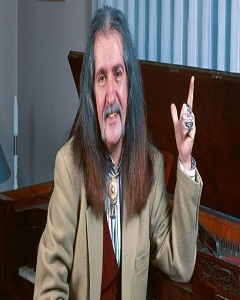
Barış Manço was born on January 2, 1943 in Üsküdar, Istanbul. February 1, 1999; Barış Manço, who passed away in Kadıköy, Istanbul, is a Turkish artist; Singer, composer, songwriter, TV show producer and host, columnist, State Artist and cultural ambassador.
He is considered one of the pioneers of rock music in Turkey and one of the founders of the Anatolian Rock genre. His over 200 songs have earned him twelve gold and one platinum album and cassette awards. Some of these songs were later interpreted in Arabic, Bulgarian, Dutch, German, French, Hebrew, English, Japanese and Greek. He went to many countries of the world with the television program he prepared, for this reason he was called "Barış Çelebi". He was awarded the title of State Artist of the Republic of Turkey in 1991.
Mehmet Barış Manço, the second child of the state conservatory classical Turkish classical music teacher, artist and writer Rikkat Uyanık and İsmail Hakkı Manço, was born on January 2, 1943 in Üsküdar Zeynep Kamil Hospital. II. Since he was born during World War II, his family named him Mehmet Barış.
His name was changed to Mehmet Barış Manço before he took the Galatasaray High School Middle School entrance exam in 1954. In the family of four children, there were three siblings named Savaş, İnci and Oktay. Rikkat Uyanık, who also taught Zeki Müren during his studies at the conservatory, later participated in television programs with Barış Manço and sang. His family origins had migrated from Konya to Thessaloniki after the conquest of Istanbul and migrated to Istanbul during World War I due to the hardships during the war years.
After his parents separated when he was three years old, Barış Manço started to live with his father. He changed homes frequently with his father and lived in Cihangir, Üsküdar, Kadıköy and for a short time in Ankara. He started primary school in Kadıköy Gazi Mustafa Kemal Primary School, where his older brother Savaş and his sister İnci, the youngest member of the family, also attended. He studied at Ankara Maarif College in the 4th grade and completed his primary school at the school he started in Kadıköy. He attended the middle school of Galatasaray High School as a boarder. In 1957, he became interested in music as an amateur. Upon the death of his father on May 4, 1959, he left Galatasaray High School and completed his education at Şişli Terakki High School.
Manço, who started to be interested in music as an amateur in 1957, founded his first group, Kafadarlar, in 1958. While this band, which was founded in secondary school, was doing rock'n roll covers, Barış Manço composed his first composition Dream Girl during this period and won a small music award in Ankara. His second group, Harmoniler, also had his friends from Galatasaray High School. He gave his first concert in the conference hall of Galatasaray High School in 1959.
When he finished his high school years, he studied painting, graphics and interior design at the Royal Academy of Fine Arts of Belgium between 1963 and 1971. He took part in a band called “Lemistgrees” in Belgium, consisting of American, Belgian, Italian, North African and British musicians. He gave a concert in Paris Olympia during the two years of his work with “Lemistgrees”. In 1966, he released two 45 records in Paris.
When he returned to Turkey in 1970, he founded the group "Kaygısızlar" with Fuat Güner and Mazhar Alanson. Reacting to the arrangement songs, he started to make music in the style of pop-folk fed from Anatolia. He made a big debut with his tenth record "Dağlar Dağlar", the album reached 700 thousand sales in five months. His work “Dağlar Dağlar” also brought the artist the Golden Record Award. He worked with the Mongols in 1971. In the same year, he founded Kurtalan Ekspres. He shot his first music video for "Hey Koca Topçu" in 1973. He made his first album "2023" in 1975. He married Lale Manço in 1978 and had two sons, Doğukan and Batıkan.
In 1980, he won gold medals at the Golden Orfe with the Bulgarian song "Nick The Chopper" and "I'm a Song". He participated in many TV programs abroad as a guest, and gave concerts in many countries. In 1983, she participated in the Eurovision Song Contest with the song "Digging", but was eliminated.
"7'den 77'ye", which started as an educational, cultural and entertainment program for children and families on TRT 1 in October 1988, came to the screen for the 370th time in June 1998 and broke a record that is hard to reach in Turkish television. In his program called "From the Equator to the Poles", he traveled with his team to more than 100 different regions in five continents and covered a distance of 600,000 km.
More than 200 songs he composed won him 12 gold and 1 platinum album/cassette awards, and some of these songs were later interpreted in Greek, Bulgarian, Arabic, Persian, Kurdish, Japanese, Hebrew, French, English and Leman. Barış Manço, who received numerous awards in his music and television life, was awarded the title of state artist in 1991, the title of Honorary Doctorate of Hacettepe University in the same year, the International Technology Award, the Japan International Culture and Peace Award, the Order of the Knight of Leopold II of the Kingdom of Belgium, the French Ministry of Culture, Literature and Art. Knight Order, Turkmen Citizenship awards given by the Presidency of Turkmenistan.
He had a heart attack at around 23:30 on January 31, 1999 at his home in the Moda district of Istanbul and died at 01:30 the same night at the Siyami Ersek Thoracic-Cardiovascular Surgery Hospital, where he was taken.
He had previously suffered a heart spasm in 1983. Since he received the title of state artist in 1991, a state funeral was held for his funeral. This ceremony was broadcast live on TRT, Kanal D and Kanal 6 without interruption.
STV and Star televisions shared the thoughts of their fans from Manço Köşk throughout the day. In addition, Star TV published an interview filmed just before his death. On February 3, 1999, his body, wrapped in the Turkish flag with the Galatasaray flag on it, was brought to the Atatürk Cultural Center and a ceremony was held, then a funeral prayer was held at the Levent Mosque and he was buried in the Mihrimah Sultan Cemetery in Kanlıca.
Due to the interpretation of "Gesi Bağları", soil brought from the Gesi town of Kayseri was also placed on his grave. After the news of his death, President Süleyman Demirel and some politicians issued a condolence message.
Before he died, Barış Manço composed the 40th year song about 40 years of his musical life, but he could not write the lyrics. Manchology, including this song, was released in 1999 and became the best-selling album of that year, selling 2.6 million. Later, in 2002, a commemorative album called Barış Songs in My Heart was released.
After Manço's death, Kurtalan Ekspres did not work on a new album and participated in many commemorative concerts for Barış Manço for about two years. Having lost an important soloist, the band released their first solo album, 3552, in October 2003.
Barış Manço Name Meanings
Click on the name you want to see its meaning and properties
Isimce.com Trends
Recent Comments
- Tengir
, commented on the name Tengir :
Tengir is a great name!
- Kelvin
, commented on the name Kelvin :
Kelvin is a name I'm proud to bear, I love how unique it is and the fact that it's a nature inspired name.
- Inza
, commented on the name İzgi :
It's my favorite name but the exact details of izgi is not mention in google
- Sevay
, commented on the name Sevay :
I love how unique and pretty my name is.
- Özüm
, commented on the name Özüm :
I love my name