Language Selection
Most Searched Names
Recent Blog Comments
- Lucilla
Where do the names of the months in the calendar come from? What Are Its Origins?
commented on post :
I love January very much. Because I was born in January.
- mariam
Where do the names of the months in the calendar come from? What Are Its Origins?
commented on post :
i love november
Latest Names
Biography of Ahmet Kaya
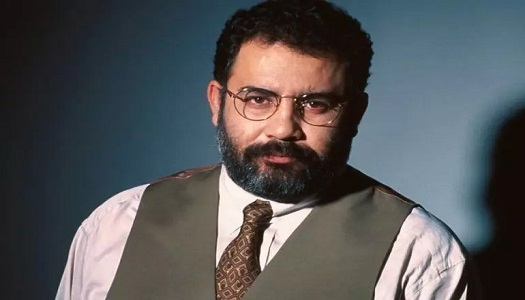
Ahmet Kaya was born on October 28, 1957 in Malatya, as the fifth child of a Kurdish-origin father who migrated from Adıyaman to Malatya for business, and a Turkish mother from Erzurum. His father is a textile worker in the Sümerbank factory. When he was six years old, his father brought him a tie. He attended primary school in Malatya. In his spare time from school and during the summer holidays, he worked either at the record store or in the van of acquaintances. When he was nine years old, he found himself on stage on the Labor Day night organized by the workers of the factory where his father worked. His father, who is retired from the textile factory, immigrates to Istanbul for a better life. They settled in Kocamustafapaşa in Istanbul in 1972. Ahmet Kaya dropped out of school due to his family's financial difficulties and worked in various unskilled jobs such as peddling and apprenticeship. He decides to finish high school externally and finishes it, and then enters the Violin department of the Education Institute.
He was imprisoned for printing prohibited posters at the age of 16. Later, he joined the activities of the People's Units Association with a few of his friends. During these studies, he continued to play the bağlama at various events. Ahmet's playing style does not conform to any method or teaching as he learned it on his own.
He did his military service in Gallipoli in 1978, while he continued his musical studies in the orchestra. After returning from the military, he married Emine Kaya and their daughter Çiğdem was born in 1982.
At that time, he went to a concert of Ruhi Su, whom he was a fan of, at Boğaziçi University, and after the concert he managed to find a way to reach the "Master". He wants to show Master Ruhi how he interprets "Spiritual Water compositions". He plays the song "Mahsus mahal", one of Ruhi Usta's best-known works. The master interrupts the song and takes the baglama from Ahmet's hand and gets angry and says, "The baglama is not played like a horse kicks, it is not fought, it is practiced with baglama and baglama." says. Ahmet walks away from there in surprise; but of course he will continue to do what he knows.
Much later, with the help of a few of his friends, he held a concert in Hodri Meydan Cultural Center and Bilsak, and on his posters he made reference to the sentence that Ruhi Usta said to himself: "Bağlama Is Played Like This!"
When he was 28 years old, he said 'Time is Time' and took his songs and took the road to Unkapanı. No one will give a face to this music, which does not fall into any category. In the following days, he makes his first album with the help of friends and his own means. In fact, the album was recalled in the year it was released, but then the censorship was lifted. Her first album is "Don't cry baby". His second album is "Holding on Pain". After the release of his second album, he married Gülten Hayaloğlu in 1985. Gülten Hayaloğlu conveys the poem "Dawn Song" by Nevzat Çelik, who was sentenced to death in prison, to Ahmet Kaya. Ahmet Kaya made his breakthrough with the album "Şafak Türküsü", which was released in 1986, making it known to a wide audience. Towards the end of 1986, he releases the album "An Income". Almost all the compositions in the album belong to him.
After marrying Gülten Hayaloğlu, she met her brother Yusuf Hayaloğlu and his poems. His album "Yorgun Demokrat", of which the majority of the lyrics belonged to Yusuf Hayaloğlu, was released in 1987. In 1988, the album "Baskaldırım" is made, of which only two songs are written by Hayaloğlu and the other lyrics are poems of well-known poets. He made the album "An Optimistic Rose" in 1989. In October 1990, he released his album "Love Wall", consisting of poems by various poets.
Gülten and Ahmet couple decide to open a studio and a production company. They set up a music production company called GAK (Gülten Ahmet Kaya) and a studio with the same name.
In parallel with his album works, Ahmet Kaya also performs public concerts. Despite the interest, participation and enthusiasm shown, he is an 'inappropriate' singer in many parts of the country.
He gets into trouble from time to time, and besides not being able to give concerts in many places, his albums are found 'inconvenient' and partially recalled. The reflection of this process in his songs is inevitable. That's why the name of the new album is 'I'm in Trouble'.
He composed the music of Tatar Ramazan in 1990 and Tatar Ramazan in Exile in 1992. In 1994, he made the program "Ahmet Abi's Ferry", which was produced by Gülten Kaya and Yusuf Hayaloğlu, broadcast on Kanal D and lasted for 13 weeks.
One of the countries Ahmet Kaya is most curious about in the world is Cuba. In 1993, his wife Gülten, their daughter Melis and a group of friends went to Cuba to celebrate the 1st of May. Ahmet meets many artists and government officials in Cuba. On his return, he invites a part of Cuba's famous Tropicana group to Turkey. Ahmet hosted a team of nine people from Tropicana, who came to Turkey upon invitation, in his own house, and they did a sixteen-concert tour, all of which would go to the Cuban children. During this period, Ahmet Kaya attends concerts for Bosnian children and Danish workers. He gives various charity concerts in almost every country in Europe.
In 1994, the album "My Songs to the Mountains" by Raks Music broke a record with 2,800,000 bandrolls. Because of the words like "Your brother will return from the mountain one day, you will hug me, my baby" in the song "Free Call" in this album, which is the 14th music album, his album is confiscated and his concert is banned.
In his first period albums, he gave weight to baglama in general. Since it cannot be included in the category of Pop, Turkish Folk Music and Arabesque, the musical genre is also called Revolutionary Arabesque. However, he opposes the definition of his musical style as Revolutionary Arabesque or protest. He composed the poems of well-known poets such as Attila İlhan, Can Yücel, Nevzat Çelik, Hasan Hüseyin Korkmazgil, Enver Gökçe, Ahmed Arif, along with the compositions whose lyrics he wrote himself. Generally, social issues are handled in his songs. Of their twenty-two albums, there is only one Kurdish song called Kervan and one Kurdish opening.
Many lawsuits have been filed against Ahmet Kaya, whose every word and song is an event in Turkey, and in his own words, the police became his second address. Despite these pressures, Kaya never denied her identity and struggled.
In addition to the confiscation of many of her albums and the cancellation of her concerts, she received the best artist of the year award at the award ceremony held at the Princess Hotel congress hall of the Magazine Journalists Association on February 10, 1999, and in her award speech: "I am going to the Human Rights Association, Saturday Mothers" for this award. I would like to thank all the press workers and all the people of Turkey. I also have an explanation: I will sing a song in Kurdish and shoot a clip for this song in the album that I am currently preparing and will be releasing in the coming days. I know that there are TV people among us who have the courage to broadcast this clip, I do not know how they will settle accounts with the people of Turkey if they do not. said. Upon these words, the guests reacted and started swearing and throwing various items. He was taken out of the congress hall under extraordinary conditions by MGD officials.
He was accused of "aiding and abetting the separatist PKK organization and inciting the people to hatred and enmity on the grounds of racial difference", after the photographs of Ahmet Kaya's concert in Berlin in 1993, which was held in a night organized by the Kurdish Businessmen's Association, were published in the newspaper Hürriyet immediately after this incident. Two separate lawsuits were filed at the Istanbul State Security Court, demanding a total of 10.5 years of heavy imprisonment. He left Turkey in June 1999. As a result of the trials, he was sentenced to a total of 3 years and 9 months of heavy imprisonment. but he was not imprisoned because he was abroad. It was later determined that these images were false.
Meanwhile, the Ordu Governorate banned the sale and possession of Kaya's tapes in the city. The DGM launched an investigation against him once again for the news of Hürriyet newspaper, which claimed that he said, "I left my car in the hometown of those dishonest people," at a concert organized by PKK supporters in Munich in 1999. In an interview with Zaman newspaper on February 9, 2000, Ben said, "I couldn't even get into my car in my country because of three bastards." I said, he denied. Ahmet Kaya died of a heart attack one night in his home in the Porte de Versailles district of Paris, while recording his album, Goodbye's Eye, in 2000. He sang the song Karwan on this album.
He died of a heart attack while taking his medication on November 16, 2000, at six o'clock in the morning, at his home in Paris. Ahmet Kaya's grave is still in the Père Lachaise Cemetery in Paris.
After his death, in 2002, an album called "Dinle Dear Ülkem", in which 20 famous artists sang the songs of Ahmet Kaya, was released.
On September 4, 2007, Ahmet Kaya Public House opened in Batman, the only place in Turkey to open in his name.
Ahmet Kaya Name Meanings
Click on the name you want to see its meaning and properties
Isimce.com Trends
Recent Comments
- akosua asiamah
, commented on the name Akosua :
I like the account but thiers no advantages or disadvantages of the name
- Hedle
, commented on the name Hedle :
My Name is Hedle and i love it!
- Tengir
, commented on the name Tengir :
Tengir is a great name!
- Kelvin
, commented on the name Kelvin :
Kelvin is a name I'm proud to bear, I love how unique it is and the fact that it's a nature inspired name.
- Inza
, commented on the name İzgi :
It's my favorite name but the exact details of izgi is not mention in google